Access Vernaculars observes that both disabled people and nondisabled people in Russia recognize and point out instances of poorly executed accessible design in the built environment. The book argues that the popular interest in images of failed accessibility ramps and other similar features circulating on the Russian internet in the 2010s can be understood as a general critique of the Russian state, pointing out hypocrisy in false façades of access, and practices therefore considered critiques of Russian ablenationalism. At the same time, the text traces how disabled people in one Russian city narrate their own experiences of navigating an environment rife with performative accessibility layered over pervasive inaccess and ableism. Through sustained ethnographic attention to the stories that disabled people tell about experiences of access and inaccess, Access Vernaculars examines local Russophone vocabularies that people with mobility impairments use to describe passage through the built environment. In addition to terms translated from global disability advocacy discourse, disabled interlocutors also used terms inherited from previous generations of Russophone political advocacy, that have been largely ignored as part of the lexicon of disability politics in contemporary Russia. The book calls for a critical global disability studies that contends with a de facto Euro-American hegemony in disability advocacy movements, and attends to the ways that vocabularies of disability access travel in friction, taking on dynamic and unexpected meanings in transnational sociopolitical contexts. Finally, the book asks how disability advocacy movements proceed in the context of ablenationalist cooptation.
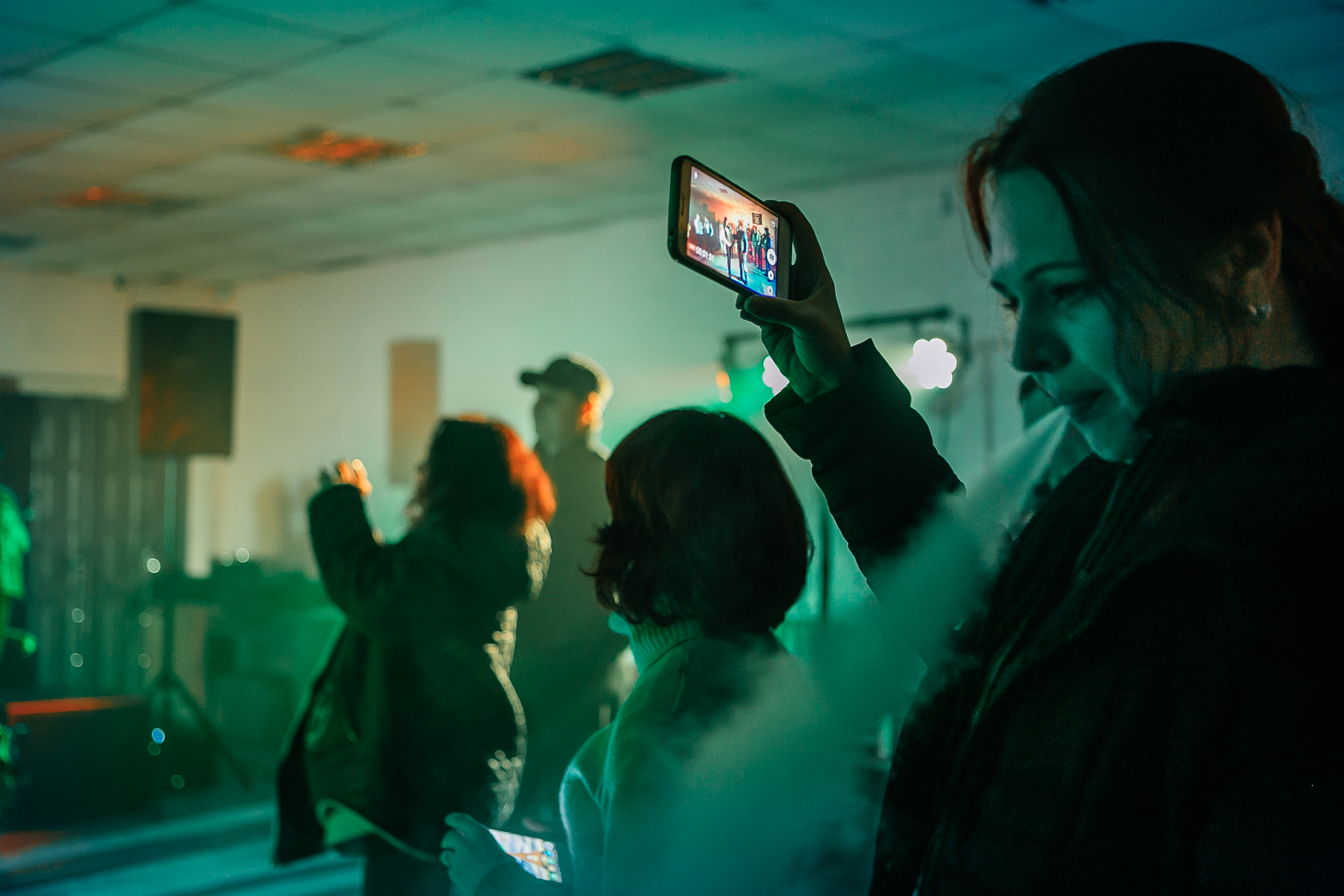
View of a neighborhood in Petrozavodsk Russia, taken from above. 2013. Photo by Cassandra Hartblay.
In early fall of 2021, the American Anthropological Association introduced a new set of guidelines and obligations for panel organizers for the upcoming November meeting. Among those guidelines were several measures intended to improve the accessibility of online and in-person conference presentations. The guidelines were developed by the AAA staff, including Nell Koneczny, a staff member with extensive disability access expertise, including a related MA degree, and lived experience of disability. Nell’s presence on the AAA staff was very important to many members of the AAA community with access needs. For several year’s prior to Nell’s hire in 2019, I served on an ad-hoc committee of the Disability Research Interest Group (a sub-section of the Society for Medical Anthropology) devoted to improving accessibility at the annual meeting. The committee came about in direct response to several members of the interest group threatening to forego AAA meetings in the future altogether after years on end of not having their access needs met, and having to start from zero explaining their access needs to temp workers hired by the org in the lead up to the conference. The subcommittee initially developed a document, Guidelines for Accessible Conference Presentations, which we circulated on our listserv, through the SMA, and eventually as part of the AAA “know before you go” information. Our strategy during this period (~2015-2018) was to slowly implement and develop a culture of access from below, colleague to colleague. We also advocated for change with the AAA as an organization, sending letters and holding meetings, that eventually led to the inclusion of accessibility in job description hiring for the position that Nell eventually filled. With Nell in place, we were hopeful that more would be done in the AAA office.
One unfortunate outcome of this advocacy work was that some elements of accessibility praxis were introduced to the broader AAA community through top-down mandates, most prominently in the fall 2021 communication about presenter and panel organizer responsibilities. On the heels of the pandemic, many anthropologists felt overwhelmed that not only were they trying to figure out how to safely attend a conference, they were being asked to shift their conference presentation habits and preparation practices with very little notice, in a way that put an unanticipated demand on presenter time in a year when everyone was already stretched thin, burnt out, and working through the experience pandemic disaster capitalism. Many anthropologists, reading the new guidelines took to Twitter to raise legitimate concerns about how when the new guidelines were introduced, and to wonder how to reconcile the inconvenience of shifting their planned conference preparation timelines weeks earlier that ever before including the preparation of new access elements that many had never implemented before. In spite of efforts from the AAA office to offer education and the politics of access as an ethos of non-exclusion an important diversity practice for the betterment of the scholarly community, the top-down nature of the changes struck overwhelmed anthropologists as too much to handle.
Observing this moment with other disability anthropologists on a group text thread, we tried to figure out how to conceptualize the conundrum. Many of the tweets circulating carried an unintentional air of ableism: why should I be inconvenienced by changing my presentation preparation timeline and practices just so that someone with hearing impairment/vision impairment can participate? For those of us in disability anthropology where access is an essential part of our scholarly praxis, and we are often eagerly awaiting the comments and feedback of our peers and mentors attending the conference, the benefit of these practices was clear. But how could we win others over to this point of view? What had gone wrong? What could be done to salvage the important politics of access while also acknowledging the real overwhelm and burnout the communique unearthed?
With this conundrum in mind, in a flurry of concern and righteous indignation, I wrote a Twitter thread (again in 2021, so well before the Muskification of Twitter) addressing the issue. As of this writing, the first tweet in that thread has been retweeted nearly 150 times, bookmarked 380 times, and received nearly 600 likes and nearly 50 quote tweets. Other tweets in the thread have likewise been liked, retweeted, and commented on. Now that Twitter, under Elon Musk’s leadership, made the site unsearchable for those not on the site, the thread is less accessible. However, anyone can access the original thread here on the Thread unroll site, although the comments and likes aren’t reflected there.
What, then, of the time-honored tradition of writing your paper en route to the conference, or over stale coffee on your hotel room desk mere minutes before the presentation? If that isn’t our disciplinary culture, I don’t know what is.
3/
It doesn’t help that these requests come via impersonal email from the AAA head office: it’s easy to forget that there are actual colleagues w/ access needs and access workers behind these requests.
4/
ASL and captioners need materials in advance in order to prepare. Especially, they need to know how to spell names; what unusual jargon, terms, places names, etc. you will be using; and something about the rhythm of the presentation overall.
5/
Plus, staff need to organize these materials & get them to the access workers. You may know that @AmericanAnthro hired an access specialist two years ago after decades of lobbying from disabled anthropologists who had persistently experienced exclusion at our conferences.
6/
But the great news is that while disability access practices for conference presentations are new to many anthropologists, your colleagues over here with research cross-over with disability studies have been immersed in a totally different conference culture for years.
7/
So how do we do it?
It is totally possible to make a slide deck before you write your paper. I like to think of it as an outline. Here’s how I do it in 5 easy steps.
8/
Step 1: I pick 1-4 key images that I know I want to talk about. They each get their own slide. I know that talking about each image, including describing it and discussing its significance will take 1-2 minutes, so I almost never use more than four images.
9/
Step 2: I look back at my paper abstract as submitted. I make a list of proper nouns, including author and interlocutor names, theoretical terms, and place names that I know I will need to use in my presentation. Hey look, an access guide!
10/
Step 3: I look at my list of words. How can they be represented on slides? If there is a key concept or theoretical idea, I put it as a stand alone word or phrase in the middle of a slide. If there is a place name, I put it on a slide with a map. …
11/
… If there is a sequence or timeline or set of ideas, I put those things together as bullet points or in a graphic on a slide.
12/
Step 4: Look at these slides. What order would they need to be in to make a coherent presentation? Reorder accordingly. Consider if you’ve missed something.
13/
Step 5: Add a cover slide (with your name and affiliation) and an end slide. Check for any other “favorite” slides you like to include in presentations about your research that you’ve missed.
14/
There! Done! This is a flexible slide deck that can now be used for your 15-20 minute AAA conference presentation, or repurposed for a longer talk in another venue. You can upload it in October for a November talk you haven’t written yet.
15/
Congrats! Welcome to access culture. It’s not so bad.
16/
One of the insights of disability studies is that access practices actually create aesthetic and theoretical opportunities that we might otherwise miss. So dig in: what new connections and aesthetic possibilities will making a slide deck this way prooffer?
17/
Access practices are not empty virtue signaling. They are a way to ensure that your colleagues have an opportunity to comprehend your ideas, colleagues whose input on your work you may be missing otherwise.
18/
And, well, getting feedback from colleagues is… the point of conferences.
And if you’re unsure as to why you’re being asked to engage in a particular access practice, that’s totally fair. Changing habits is uncomfortable and takes time. Access practices require culture change. AAA has suggested new habits faster than our collective has changed…
21/
Ask one of your colleagues with disability access knowledge for input. Or spend a little time learning about disability access & disability justice.
Or, you know, just submit your slides using the steps above & feel confident about being ahead of the game come November.
22/
And hang in there, everyone. Pandemic life is tough.
Addendum: If you’re reading this thread as a non- anthropologist, it is relevant to know that the standard practice at anthro conferences is to read aloud from a written script. The text takes primacy & is expected to be of written-article quality. …
… many of us were trained to wordsmith our written presentations down to the last second, and only add slides as a bonus if we have time. …
… thus, asking anthropologists to make a slide deck before writing then presentation script goes against years of disciplinary training and common practice. More so than in fields on which presenting data without a script based on slides is the norm.
In November 2021, the authors and editors of a special issue of the journal Digital Icons: Studies in Russian, Eurasian and Central European New Media gathered online for a panel hosted by the Harriman Institute at Columbia University. A recording of the panel discussion is available on YouTube, and embedded below.
The issue, “Digital Selves: Embodiment and Subjectivity in New Media Cultures in Eastern Europe and Eurasia,” is available in open access at digitalicons.org. It has been a pleasure to get to know the emerging scholars who contributed to this special issue as co-editor.
Embedded YouTube video with captions, recorded Zoom panel.
The Centre for Global Disability Studies at the University of Toronto will celebrate it’s first birthday this July, 2021. In the past year, we’ve been so lucky to assemble a community of faculty and graduate students at UofT. We also chartered our small grants program for UofT researchers and a group of our core lab members presented at the virtual Society for Disability Studies conference.
Finally, we’ve launched a website, Twitter and Instagram, and begun planning our first event series (postponed til fall 2021 due to the CAUT censure of UofT).
Follow us on these platforms to find out what is coming up during the next year at CGDS!
It’s been a strange year of working remotely, but in spite of everything – Zoom fatigue, postponed projects, an enduring palpable sense of loss in the absence of informal social interactions – something new has been growing and unfolding here at University of Toronto. So, this week, I’m really happy to debut the website of the new Centre for Global Disability Studies, a group that supports faculty, students and researchers doing justice-oriented disability studies with a transnational, anti-racist, anti-colonial approach across the three University of Toronto campuses.
It’s been an slow and thoughtful process to collectively recognize the goals, vision, and mission of the group, and I’ve learned so much as it has come together through a year-long consultation process last academic year, and a building phase this academic year (read more about this in my letter from the director here).
The new Centre offers a small grants program to UofT researchers, and will begin presenting public- and campus- facing events later this spring. We also hold biweekly lab core meetings, and offer RA-ships for graduate students. Check us out!
The logo of the Centre for Global Disability Studies. A large blurry circle with two small bright red and pink circles overlapping.
Very delighted to announce that the book is now available!
Order your copy from University of Toronto Press now. And visit the companion webpage [opens in new tab] where you can find supplemental resources, watch videos of past performances of the play, and consider performing the work yourself!
UPDATE: This project has been postponed by one year due to the pandemic, and the exhibition will now take place in Winter 2021.
This January, I, along with my collaborating co-curators in the Critical Design Lab, Aimi Hamraie and Jarah Moesch, will team up with Tangled Art+Disability and the Doris McCarthy Gallery at the University of Toronto Scarborough to bring a new art exhibition on the theme of Crip Ritual to life. The show will be a joint exhibition spanning the two Toronto, Ontario galleries simultaneously, while also available remotely as a digital exhibition on the #CripRitual project website. Featuring works by artists from the Canada, the US, and Russia, the project considers the role of ritual in crip strategies that bring disability culture and community into being and support access, self care, and advocacy in an ableist world.
Stay tuned for opportunities to engage with this exhibition!
I’ve been thinking for awhile now about how anti-ableist praxis requires thinking and working to make the spaces of knowledge production more accessible, and in this episode, I ask Eliza, Lindsey, and Sean about some of the unique access practices that they devised for the 2019 conference Cripping the Arts. We hear about the amazing access guides they created, and how they integrate accessibility into their curatorial practices more generally.
You can find and subscribe to Contra* on Apple podcasts, Stitcher, and Google Play, or you can listen to individual episodes and find show notes and full transcripts on the podcast webpage. You can also follow the Critical Design Lab on Twitter and Instagram for more updates.
My first book, I Was Never Alone or Oporniki: An Ethnographic Play on Disability in Russia, is now available for pre-order from University of Toronto Press, Amazon.com, and Amazon.ca. The book is scheduled for release in May 2020 [edited to note publisher’s delay] November 2020.
I Was Never Alone or Oporniki presents an original ethnographicstage play, based on fieldwork conducted in Russiawith adults with disabilities. The core of the work is the scriptof the play itself, which is accompanied by a description ofthe script development process, from the research in the fieldto rehearsals for public performances. In a supporting essay,the author argues that both ethnography and theatre can beunderstood as designs for being together in unusual ways,and that both practices can be deepened by recognizing thevibrant social impact of interdependency animated by vulnerability,as identified by disability theorists and activists. (more…)
Contra* is a podcast about disability, design justice, and the lifeworld created by Aimi Hamraie and produced by the contributors to the Critical Design Lab, a multi-institution project.
It’s been an exciting year watching this project grow in my role as contributor to CDL and the podcast, and with our first season complete and interviews and plans for season two underway, this summer… as podcast feeds thin out… I’m looking back and thinking again with all of the amazing thinkers featured on the first season.
This is an exciting space to hear Aimi and our other contributors in conversation with podcast guests talking through problems from designing access to creating critical artworks like Mimi Khuc’s “Open in Emergency.” Check out the *full transcripts* from interviews with Sara Hendren, Marcel LaFlamme, Moya Bailey & Vilissa Thomson, Alice Wong, Robert McRuer, and more on the podcast website, or search for the podcast and subscribe via Stitcher, Apple Podcasts, or Google Play.